


Episode 6 • coming soon

The Like Button & The Merchant Guild
Medieval merchant guilds to TikTok influence metrics. How the oldest reputation mechanism in history got rebuilt at planetary scale and immediately gamed.
Episode 5 • Released: Oct 27, 2026
Gossip helped humans decide who to trust long before social media. From Roman letters to algorithms, how our oldest social technology became a global information system.
MARY-ANN:
There’s a British anthropologist called Robin Dunbar who, throughout the 70s and 80s, is spending a lot of time in Ethiopia, watching a group of gelada baboons.
He’s interested in one thing in particular. Their grooming ritual. The baboons spend hours each day grooming each other.
And the closer Robin watches, the more he realises it’s not just about hygiene.
SOPHIE:
If you're a gelada baboon, you manage your social interactions by grooming.
MARY-ANN:
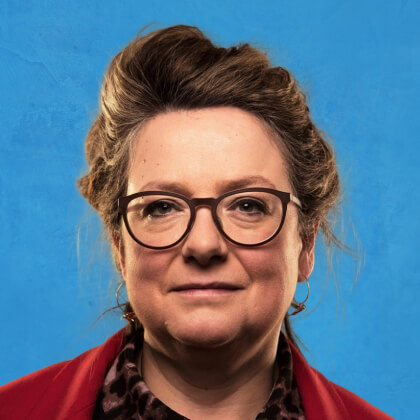
Sophie Scott is our resident neuroscientist from University College London.
SOPHIE:
You know where you are in your social network by who grooms you and who will let you groom them.
But it takes ages. And so for most primates, when they're not eating or sleeping or managing sort of critical events, they're grooming each other. It takes ages.
MARY-ANN:
This makes Robin the anthropologist think about humans, and the way we manage our social interactions. It’s not by grooming, clearly.
SOPHIE:
What Dunbar pointed out is that we are able to both maintain social networks very efficiently and quickly just by talking to each other or even maybe just by saying hello
MARY-ANN:
Talking to each other. Language. He says that, where baboons establish hierarchy and trust by picking nits out of each other’s fur, humans gossip.
SOPHIE:
So if you gossip, what you're basically saying is, "I trust you enough. I feel close enough to you to share intimate things with you
MARY-ANN:
And often, we're not just talking about ourselves. We're talking about everyone else. Who’s just come back from holiday? Who’s had an argument? Who’s lost their job? Who’s just had a baby?
SOPHIE:
That’s a very very powerful thing because it’s making people feel included, but also it can be used to exclude
MARY-ANN:
Robin Dunbar reckons that gossip works best when the group is small enough for everyone to keep track of everyone else. He thinks that limit is about 150 people. Beyond that, it gets harder to keep tabs on who’s who.
TOM:
You do see that as a sort of recurring number in human history.
MARY-ANN:
That’s Tom Standage, Deputy Editor of The Economist magazine.
TOM:
The size of a military unit, the size of a village, the size of a, a church congregation. It's essentially the largest group where everyone can know each other and keep track of the relationships within that group.
MARY-ANN:
Robin Dunbar returns to the UK and publishes his theory in 1992. It’ll go on to have a huge impact on how we view human relationships.
TOM:
He says without gossip there would be no society.
MARY-ANN:
Gossip might get a bad rap, but it's one of the key ways we've learnt who to trust. For centuries, information has travelled by word of mouth - who said what to who, who’s stroking whose back. It’s held whole communities together.
But the world has got bigger, and the ways we share information have changed. Now, our online lives are filled with stories about people we've never met, from people we've never heard of.
Has gossip been replaced by the algorithm?
I’m anthropologist Mary-Ann Ochota and this is Trust Forward, a history podcast tracing the evolution of trust over the last few hundred years.
This is Episode Five, The Gossip Machine.
TOM:
For most of human history, the way people got information was just by chatting to other people.
They didn't get it in written form, and so they had to determine who they thought was trustworthy.
MARY-ANN:
When he’s not working at The Economist, Tom writes history books. His book The Writing on the Wall is all about how humans have communicated over the last 2000 years, from ancient graffiti to social media.
It’s almost like a history of how people have always gossiped about each other; helping form bonds of trust over time.
TOM:
Then, of course, what has happened over history is that we've found ways to chat with people where they don't have to be right there in person.
MARY-ANN:
One of those changes in the gossip machine arrived about 5,000 years ago, in Mesopotamia - modern-day Iraq. The invention of writing in the form of cuneiform: symbols pressed into soft clay.
Its earliest uses were largely practical.
TOM:
It's all very bureaucratic. It's all about tax receipts and, you know, land ownership and things like that. And it's not really until the Roman period where you have a large enough group of people who are literate and literacy is quite widespread, you go to Pompeii, you can see there's election propaganda on the walls. You can see price lists in the wine bars, and this is because a lot of ordinary people were capable of reading and so they could... You know, this made sense.
And they also have an enormous number of enslaved scribes and messengers who can do the writing and the carrying of the messages for them. So the letters of Cicero is my favorite example 'cause we have-- they were, they were kept, and we have basically his inbox and his outbox.
And we can see that he was writing about, you know, great, great affairs of state. But a lot of it was gossip, and this is because in the Roman period, the social gossip, who was married to who, and who had fallen out with who, and so forth, was the same as the political news.
MARY-ANN:
Mm.
TOM:
Because so much of Roman politics was based on family interactions and, you know, marrying your son or your daughter off to somebody for, for political reasons.
And so Cicero says this, you know, "I've just received a letter from so-and-so, and I've included a copy for you with this letter." And, …if I was a Roman in some province, and I got a letter from my friend in Rome telling me the gossip and the gladiator results and things like that I might read it out at, at, at my dinner party, and then everyone could hear the news from the centre, so news was being shared and this was quite gossipy, but it's using the written medium really for the first time. And so you're starting to get this sort of written gossip.
MARY-ANN:
The Romans also produced something called the Acta Diurna, which literally means “Daily Acts”. It’s one of the earliest known examples of something that looks a lot like a newspaper.
TOM:
What you would do if you were a wealthy Roman, you would send your scribe down into the, the forum to copy it down, and then you could get the news headlines over your breakfast. And in fact, they'd copy it down onto a wax tablet. It looked an awful lot like a modern iPad, and it's about the same size. It was a sort of 10-inch diagonal kind of wax tablet thing. So that was state news, and it was quite boring. And actually, really what you want to do is supplement it with, with gossip from your friends, and that's what people s- first did in that period.
MARY-ANN:
Now, of course, there's not just the sharing of the information, but there's the manipulating of the information and using those channels in, in wily ways. When do we s- first start to see evidence of people literally rewriting history, kind of changing the, the news
TOM:
So, I mean, obviously, you know, misinformation exaggeration of kingly exploits is as old as time.
The example that springs to mind for me would, again, come from the Roman period, which is Caesar, Julius Caesar's histories of the Gallic Wars so his conquests in Gaul, which most people look at today and go, "This is straight up, you know, war crimes."
MARY-ANN:
In the first century BC, army general Julius Caesar was waging a brutal war against the Gauls in modern-day western Europe. He used the written word to spread what historians now think was a heavily edited version of that story.
TOM:
At the time, he is engaged in a very fierce political conflict in Rome, and so this has propaganda value for him, and you can tell that he is changing the way that he's describing the events and it’s very difficult for anyone else to check because how many soldiers on the battlefield would be able to correct him. It’s older than writing, misinformation clearly, but you can spread it much more easily when you've got writing and,
Julius Caesar and others start to do that.
MARY-ANN:
Caesar found out that writing gave stories a life beyond the person telling them.
In his case, to spread mistruths. But it can also be used for good.
The invention of the printing press in the 1400s turbocharged our ability to spread information; to extend our sphere of gossip, and trust. For the first time, it exposed people to ideas they would never have come across otherwise, and it changed the course of human history.
Like in the story of Martin Luther from the 1500s, a German priest whose criticisms of the all-powerful Catholic church spread across Europe, all with the help of the printing press.
TOM:
So he posts his screed about, you know, the 95 theses about why the Catholic Church is corrupt and needs to be reformed. And they are copied down by printers who can see that they're gonna make money from this, and they can print them, and then those printed versions spread to other towns, and everyone's asking about it and talking about it. So the printers in those towns get hold of a copy and then make, you know, make their own version and print that. And Luther, you know, this is not what he, he's expecting at all. But once it's happened he makes use of that, that sort of viral spread of what he did,
MARY-ANN:
And as the instigator of the pamphlet or the really juicy, you know, broadsheet about Jack the Ripper's crimes or what have you, once that thing is out in the world, how easy is it to control the story that spreads? Or is it out of your hands, it's a wildfire, it's down to other people to share or malign or elaborate on your gossip?
TOM:
Well, I mean, I think we all know from personal experience, and it's definitely even more true in the internet era, you know, the old adage that a lie gets halfway around the world before the truth has got its boots on.
And we've gone from what I like to think of as a world where the default was if you read something in the newspaper or saw it on TV, it was probably true. That was the case for me when I was growing up. Now, if you read something on the internet, the default is it probably isn't true, and you should say, "Where does this come from? What, you know, where's the evidence?" And if you want to believe that it's true, you have to kind of do your homework and make sure that it is.
MARY-ANN:
We've got a bit slack though, haven't we? I mean, we don't really do that much critical thinking a lot. Are we kind of in a lag, do you think?
TOM:
I think it's a crucial life skill now. You know, when you’re shopping online and you search for something and then you go ‘oh this is a very good price’ and then you go ‘wait a minute, who’s this vendor, what dodgy website is this.’
It's really very different from talking to people around the well or, you know, in the village pub where you can see people and you can evaluate them, and over time you can see how trustworthy they are. This is just like being in a, you know, a random different pub every day with different people and, you know, half of them are actors paid to say dubious things. And you don't know what algorithm is deciding who gets put in which pub. So, you know, it's very, very difficult to establish trust in that environment. And we, yeah we definitely need to develop critical thinking skills in order to navigate that.
MARY-ANN:
Tom, of all the forms of communication that humans have dabbled with over the millennia, what would be your fave?
TOM:
Ooh. There are so many to choose from one that springs to mind is actually one that's kind of died out now, but it's the use of Morse code.
What I find fascinating about this is the sort of way that Morse code is almost musical. The people who were very, very good at sending and receiving it had a sort of style. And it was sort of like playing a musical instrument. It became second nature to them. And I’m a musician, I’m a drummer as well, so it’s using rhythm to send information and it’s kind of musical, so that sort of ticks a lot of boxes for me. And there’s a period of history I wrote a book about likening the Victorian obsession with telegraphs to internet mania in the 1990s. And again, you get an awful lot of the same phenomena. You get the online weddings and the scams and the predictions of world peace and so on. So the technologies come and go, but the people stay the same.
MARY-ANN:
I love the idea that something as, as kind of dry and as objective and, and mechanized as Morse code still has the capacity in the hands of a human to have something artistic and have a kind of a signature that you can say something about yourself or express yourself through it. I think that's always fascinating.
TOM:
So one of the things that happened... some telegraphers claimed that they could tell male from female operators. and you get sort of telegraphic romances in the, in the 1880s because, telegraphy was -
MARY-ANN:
No
TOM:
Yes, you do. Telegraphy was considered suitable work for women 'cause it wasn't too strenuous. And if there weren't messages that needed to be sent and received, they could always do some knitting
MARY-ANN:
Of course
TOM:
And the women telegraphers were segregated in the telegraph office from the men, but of course they were in constant connection with them over the, over the wires, and so you get various, telegraphic romances. You get online weddings and, yeah, a whole load of, whole load of things happening. So, so it’s a -
MARY-ANN:
Oh, I love that. Their eyes met across the crowded dots and dashes. Wow.
TOM:
Exactly. So this whole kind of, the nature of online community and the, kind of you know, we feel like we’re in the same room even though we’re far apart, all that kind of stuff. These are sort of universal traits of human nature and, you know, the technologies that allow them to come out change all the time, but it's basically the same humans underneath making the same mistakes and chasing the same dreams.
MARY-ANN:
Gossip works because we know the people involved. But the world has now grown far beyond our village.
When writing first appeared in Mesopotamia, there were only a few tens of millions of humans on Earth. By the time Caesar was conquering Gaul, there were around 200 million. When the printing press arrived in Europe, there were half a billion.
And today, there are more than eight billion of us.
Robin Dunbar's 150-person circle is a tiny drop in that ocean.
TOM:
I can't look everyone in the eye and shake them by the hand, so I need to find institutions that I trust to do that.
MARY-ANN:
Enter the algorithm. We’re increasingly outsourcing some of that judgement to numbers.
CATHY:
We've been kind of under the spell of algorithms for decades.
MARY-ANN:
America, the 1980s. People have been borrowing money from banks for generations. You want a mortgage? A loan to start a business? Well, you sit across a desk from a bank manager and you make your case.
But that system has problems. People of colour, and women, are being turned away. The question of who can be trusted to pay a loan back can be riddled with prejudice.
CATHY:
So there was, like, a law against that
MARY-ANN:
Cathy O’Neil is a mathematician and data scientist who studies how algorithms shape our lives. She’s written a whole book about it: Weapons of Math Destruction.
CATHY:
But then the banks were kind of like, "Well, how are we gonna know whether someone's credit worthy?" And they invented the credit score.
MARY-ANN:
Credit scoring has slowly been developing for decades, but in 1989 an American company introduces the FICO score.
Suddenly, a complicated question - ‘can we trust this person with our money?’ - has a numerical answer. Not a conversation. Not a gut feeling. A score.
CATHY:
It was invented as a reaction to what was widely understood to be a racist, sexist process whereby bankers would refuse loans to women and to people of color, simply because of their own policies and biases.
MARY-ANN:
The promise is consistency: judge people by their financial records, rather than by a bank manager's personal prejudices.
It’s a good idea in theory. But are the answers from the algorithm any more trustworthy? And over time, have we become over-reliant on them?
Do we trust the algorithm more than the person?
CATHY:
What I am fascinated by is my mom who like now has a smart watch and tells me every morning whether she slept well based on her watch, and I'm always like, "How did you sleep well based on your feeling?" And it's different. And yet somehow she cares more about the watch.
It's like this weird thing. It's a kind of a, a, almost a spell that numbers have over us.
MARY-ANN:
So this whole podcast series is all about what is trust, how it's evolved through history, how people break those relationships of trust and then rebuild them. It all centres around this word trust. How would you interpret the word trust?
CATHY:
Trust is a sort of understanding that the person you're talking to, if, if we're talking about a specific one-on-one interaction shares a norm with you. So we have social agreements. Those are the norms, and we have to all adhere to them or they don't work, like the society breaks down.
MARY-ANN:
And then of course, when we kind of scale that up and we're talking about not just the people who you know one-to-one directly through, like, long generational family relationships in a small scale society. Most of us live in a world now where many of our interactions are with strangers or corporate bodies that don't really have a human interface.
CATHY:
Right.
MARY-ANN:
How does that change those relationships of trust that we've kind of brought from the small band of people that you rely on, who you're probably related to, into the 21st century?
CATHY:
Yeah, that’s a really important question. As children, we're socialized, right? We're socialized, and we think about it as we're socialized by at first our family, and our parents, and our siblings, and our cousins, and our teachers. And then slowly but surely, we become part of a larger group. The idea is we start with inter- direct interactions.
And then we go to the internet, which is not only corporate, but it's really based on profit-seeking motives. It's become pretty clear that the norms that we have established in our family and with our friends and our teachers largely don't really hold on the internet.
MARY-ANN:
Was there kind of a, a turning point where we started to trust numbers more than people?
CATHY:
I do think there was a turning point. You know, even when I d- was on Friendster back in the day when Friendster, before Facebook, we chose our friends on Friendster, and we started gossiping. You know, we just started talking about each other and stuff. But little did we know that this was being broadcast to a much larger audience, you know, so we talked, Mary-Ann, about how we, our norms develop among our family and our friends, and we're used to that. So we have a kind of understanding that that's our audience, but what's actually happening behind the scenes is that the audience is global when it comes to social media, and that's something I don't think we can really have in our heads.
So rather than us trusting the algorithm or the numbers more than our friends and our family, I think what's happening is that we just don't really think about it right. We don't really imagine it. We cannot really imagine how big our audience is, and we're trying to have a somewhat private conversation, and suddenly it’s blast- it becomes viral, and it's blasted to the rest of the world.
MARY-ANN:
And it’s not just the size of the audience that's changed. Algorithms are now everywhere.
CATHY:
When you apply to college, when you apply for a job, whether you get a preapproval for a medical emergency. Basically every bureaucracy that you interact with every formal bureaucracy has become an algorithm.
MARY-ANN:
She thinks that not all of these are good. She says that there are ‘bad algorithms’, which simply reinforce the societal prejudices that they were initially trying to prevent.
CATHY:
In some sense the algorithmic revolution was meant to make them more objective and less unfair. Just unfortunately, the way they were actually built was mostly just to copy the past. So I guess maybe the first real step towards the modern version of everything being an algorithm, was the, well, first of all, the FICO score, but there was a actually a pretty early on, like, I wanna say 1970s or 1980s example of a medical school in England, where the, the admissions process to get into the medical school was turned into an algorithm, and it was for the f- a few years tested alongside the normal process that was human-led, and they found a pretty good correlation between what the humans were deciding who should get in versus the algorithm. So for a while, they just let the algorithm do its thing, but pretty soon they realized that they had stopped admitting anybody with a foreign name, and so any foreigners or any women. So it was like not only the, an early example of an algorithmic use in this kind of bureaucracy way, but it's also an early example of how bias can just go along right with it.
MARY-ANN:
But Cathy, some people would say, actually, if you're training a range of offers that you're, you're giving me on data from what's happened historically, that's just evidence-based. Like typically, people who search for school shoes for their kid then buy shoes from this brand. So I'm just gonna show you this brand straight away, and it saves you five minutes, and you say thank you very much, and you get the right shoes that your kid needs. Happy days, off we go. What's wrong with that? Obviously it can be misused.
CATHY:
Right
MARY-ANN:
But in and of itself, is that not just good evidence-based decision-making?
CATHY:
I would argue that it, it often is. It often is quite useful. That's why it's allowed to exist. But I would say that we don't actually get to decide what evidence it uses to de- make our decisions for us, right?
I mean, there was an example of this. Amazon famously built an algorithm to help hire engineers, and then they tested it and found that it was sexist, that if you had, like, admitted to having gone to a women's college it would take away points from your overall score for that resume. Or if you played women's lacrosse, you know? That doesn't seem right. So I guess the question is what constitutes the evidence that you actually want an algorithm to consider? And that's a really deep question.
MARY-ANN:
And that’s the question Cathy has made her life’s work. She audits algorithms to understand how they make decisions, who they benefit, and who they leave behind.
Because if we want to trust them, we need to know what they’re actually doing. Not simply accepting an answer that pops out of the black box.
MARY-ANN:
Cathy, do you have a favorite algorithm?
CATHY:
I mean, I get asked that a lot, because I-
MARY-ANN:
Do you? Ok.
CATHY:
Yeah, no because I critique a lot of algorithms, and just to be clear I critique them not because nobody likes them, I might even e- enjoy them, but because they have real harm on some stakeholder in the system, and, so it’s just, it’s clear that, I hope that we should consider all the stakeholders and whether they're harmed when we think about whether an algorithm works well. But, to answer your question, I think Google Maps is probably my favorite algorithm, and in particular, Google Navigation.
I went with my then eight-year-old on a very rainy day, like overnight flight to Ireland, and it was like 6:00 in the morning. We hadn't slept at all. It was raining. I rented a car, and I managed to get to our hotel in Dublin without ever getting into a car accident. We're driving on the wrong side of the road in rain, in rush hour, and I even cried at some point, and so did my son. But I made it there alive, and I was like, "How did that happen? What an amazing technology."
MARY-ANN:
The algorithm saved my life.
CATHY:
I mean, it was, it saved my vacation. And I'll just add that, like, there are stakeholders there who don't like it. Because I have to, I don't wanna be a hypocrite. Like, who are the stakeholders that feel harmed by Google Navigation? And I thought of some, like people whose streets used to be really quiet, but then Google Navigation figured out they're good shortcuts. So now they're less quiet. But I'm just like, "Eh, it's a public road," the harm on you is not that bad. For that reason, it's incredible to me how much that's given to the world, Google Navigation.
MARY-ANN:
So algorithms aren't automatically good or bad. We bank, we work, we even date - thanks to algorithms.
But they can also have a really bad impact, especially because they’re shaping our decisions and lives in ways sometimes we don’t even realise.
The answer is to build better algorithms, and improve the ones we already use.
Some good news? Cathy actually feels positive about the future.
CATHY:
Honestly, I think we're gonna be okay. And I think the young people, like I’ll just say, my child who's 17, his friends, they're anti-AI. They're anti-social media. They refuse. And it's because they are over it. They want to do things in real life with each other.
People my age are kind of terribly naive and we like jump on the next thing as if it's the best thing that... We're the ones that have trust problems. So good for them for, like, somehow being wiser than us and I think that’s just gonna continue and I think like in 50 years those kids are gonna be a little bit older than we are now and they're gonna be like, "How did my parents fall for that?"
MARY-ANN:
And so the messy imperfection of trust between actual physical fleshy humans will stay at the heart of our relationships despite being mediated by, by machines and algorithms, the secret black box
CATHY:
Right, exactly. I think we're raising a generation that are like, profit-seeking mediation isn't working for us. We're gonna go back to the person-on-person interaction, and good for them.
MARY-ANN:
There’s something reassuring in knowing that we can step back from the noise and choose real connection.
TOM:
Human nature has stayed the same. Even though the technologies of gossip have changed, essentially the desire to share information with other people
And the sort of quest for novelty. This is an age-old and sort of unchanging aspect of, of human nature.
MARY-ANN:
I’m back with Tom.
TOM:
We've just found a variety of different and new ways to push the same old buttons in our Stone Age brains. And we're still sort of running on that Neolithic software.
MARY-ANN:
Tom, you're the curator of our Museum of Trust 500 years from now, what object from history are you going to put in that best depicts how humans learn to trust each other?
TOM:
I think this is such a good question. I think the thing that really, for me, is a key turning point is the introduction of paper money. because with gold and silver coins, it's not much of a leap to take a coin from someone if you just look at it and go, "Yeah, it's a piece of gold. Great." whereas taking a piece of paper from someone that says, "I promise that you can take this to a certain place, and they'll give you a bunch of gold," that really is a leap.
So that's what I would put in my museum of trust.
MARY-ANN:
We’ve come a long way from the invention of paper money, where this series began. From using a piece of paper as an IOU, to gossiping with our friends, to sending off a job application; the principle has stayed the same. It’s all about working out how we can put our trust in the right place.
Next time, we're going beyond the algorithms. In the final episode of season one, we're looking at what happens when our lives, our relationships and our sense of who we are moves entirely online. When the digital world isn't just something we dip into, but it’s the place where we’re building bonds of trust entirely from scratch. And we don’t even know if the person we’re speaking to is real.
SOPHIE:
People are trying to capture your attention, trying to get you to trust them, it's an industry
BRUCE:
Two dots over one dot, we see a face. We are primed to do that. We see faces everywhere. If something talks to us, we see a person.
MARY-ANN:
Trust Forward is a podcast from Sumsub, AI-powered trust infrastructure for compliance operations at scale. It’s made in collaboration with This is Distorted.
It’s hosted by me, Mary-Ann Ochota. And it’s written, produced, and sound designed by Anna Staufenberg.
Our Executive Producers are Alex Jungius and Anna Brusnik.
Thanks for listening.
Before social media, newspapers or even writing, humans had a way of working out who to trust. We talked about each other.
In this episode, Mary-Ann Ochota explores gossip as one of humanity’s oldest social technologies. Cognitive neuroscientist Professor Sophie Scott explains why gossip may have evolved as an efficient human equivalent of primate grooming. It helps us build bonds, share information and work out who belongs in our social world.
Historian and writer Tom Standage traces how those conversations travelled further as new technologies arrived. From Roman letters and early newspapers to the printing press and the internet, every new medium has expanded our circle of gossip. It has made it easier to share knowledge, but also easier for rumours, propaganda and misinformation to travel far beyond the people who can verify them.
Then mathematician and data scientist Cathy O’Neil asks what happens when the gossip machine is run by algorithms. Her work reveals how the systems making decisions about jobs, education, credit and more can carry old prejudices into the future. Algorithms can be enormously useful, but if we are going to trust them, we need to understand whose interests they serve and what they are really deciding.
It is a story about the human need to share information and make sense of one another. The tools have changed, but the instinct remains the same.
Research exploring how physical touch helps build social bonds, support relationships and maintain human social connections.
An exploration of how language may have evolved as a way for humans to maintain social relationships and manage larger social groups.
Research examining gossip as a form of social communication and its role in human relationships and group cohesion.
An introduction to cuneiform, one of the earliest known systems of writing, developed in ancient Mesopotamia.
Discover an election-related inscription found in Pompeii and what it reveals about political campaigning and communication in the ancient Roman world.
The story of the first transatlantic telegraph cable and the attempt to send messages between Europe and North America almost instantaneously.
A biography of the German theologian whose actions helped trigger the Protestant Reformation and transform the spread of religious ideas across Europe.
An investigation into claims that Russian-linked disinformation helped amplify fears about bedbugs in France, highlighting how online narratives can fuel public anxiety.
A look at the history of credit scoring and how financial institutions developed systems to assess people’s creditworthiness.
A retrospective on Friendster, one of the early social networking platforms, and its place in the development of online social networks.
An accessible explanation of how pathfinding algorithms calculate efficient routes, using Google Maps as a real-world example.
Money only works because we agree to trust it. From Roman coins to digital balances, this episode explores how belief between strangers became the foundation of the systems we still rely on today.
Science is built on evidence, but who gets trusted to produce it? From Cambridge protests to pulsars, how reputation and authority shaped who science believed.
Con artists don’t steal trust, they build it. From the original confidence man to Ponzi schemes, how scammers turn confidence into their most powerful tool.
Even outlaws need rules. From pirate codes to Mafia rituals, how criminal groups build trust, enforce loyalty and keep order beyond the law.
Medieval merchant guilds to TikTok influence metrics. How the oldest reputation mechanism in history got rebuilt at planetary scale and immediately gamed.