

Episode 5 • coming soon
Before Spreadsheets, There Was Gossip
Lloyd's Coffee House to R.G. Dun & Co. How reputation moved from conversation to ledger to algorithm. The moment trust stopped being personal and became a number.
Episode 1 • Released: Sep 1, 2026
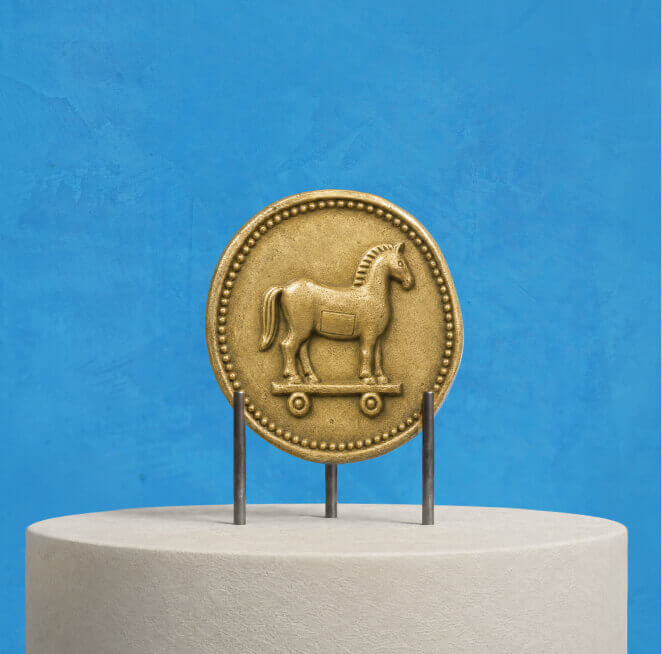
Money only works because we agree to trust it. From Roman coins to digital balances, this episode explores how belief between strangers became the foundation of the systems we still rely on today.
MARY-ANN:
In the north of England, about 12 miles inland from the Yorkshire coast, there’s a roughly two-square-mile plot of land. To the untrained eye there’s nothing much that differentiates it from the vast expanse of fields that surround it. But lying underneath this unassuming patch of grass is the gateway to one of the strangest and most remarkable stories that humans have ever told.
Let me take you back to about 2000 years ago, when the Romans ruled Britain. This spot used to be a bustling trade town on the banks of an ancient stream.
BRENDON:
We know that the Romans crossed the Humber Estuary around 71 AD this would've been a very hostile landscape.
MARY-ANN:
This is Dr Brendon Wilkins. He’s an archaeologist who’s spent nearly thirty years learning about the people of the past through the objects they’ve left behind.
BRENDON:
The Iron Age tribe, the Parisii were fearsome, so this was an important location. It was a way that the empire could extend trust to people. It was a way to kind of reach out into these hostile territories.
MARY-ANN:
This is where tired travellers would’ve stopped for a rest. There’s a ‘mansio’, a sort of roadside service station, perfect for a quick refuel.
BRENDON:
You could be granted a bed, a meal, stabling for your horses
MARY-ANN:
And then, they might just head to the market to trade.
BRENDON:
This was a period of colonisation. And that didn't just have to happen by the sword. It could happen through trade.
MARY-ANN:
There’s one particular object all the traders are handling. Thin, round discs made out of silver. They’re coins. Roughly the size of a five-pence piece.
BRENDON:
Struck with the head of the emperor under which it was minted with a Latin inscription.
MARY-ANN:
These coins - or denarii, as the Romans call them - are used to trade any number of things. Like jewellery; or wine goblets; or pottery; or sheep.
BRENDON:
These would've been the core of the trading system across the Roman Empire.
MARY-ANN:
Let’s take this one trader. He’s got with him some top quality pottery that’s been brought over from France. He’s come to the market to see if he can shift it.
He doesn’t speak the local language, and he doesn’t know anyone here. But he trusts that the money will do the talking. He sets up his stall, keeps his purse of coins close, and he starts to trade.
A man wanders over, and together they start to dance the haggling waltz: how many silver coins is he prepared to pay for the pottery?
MARY-ANN:
This tiny moment contains one of the great problems of human history: How do you get two people who’ve never met to agree on something as important as what something is worth?
How do you create trust between strangers?
Because money isn’t inherently valuable. It’s only worth something because we say it is. And we trust that everyone else around us believes the same story.
MARY-ANN:
Trust. It’s a totally abstract thing. A slippery concept that’s hard to grasp, even though it shows up in the world around us all the time.
But trust is fragile. It has to be actively maintained. Otherwise, it breaks. Throughout history, people have found ways to exploit it. Systems have broken. And when they have, we’ve had to find new ways to rebuild them.
That's what this series is about. Trust: making it, and breaking it.
I'm Mary-Ann Ochota. I'm an anthropologist and archaeologist, and I've spent my career trying to understand why we humans do the things we do.
Over the next six episodes, I’ll be meeting the world’s top minds - from poker players to astrophysicists, mafia experts to archaeologists - to understand how trust has evolved through history. From the invention of money and the Scientific Revolution, to conmen, pirates and spies, gossip, and today’s digital world.
Beneath all these stories is the same thorny problem: How do we build those invisible agreements that hold society together? How do humans decide what - and who - to believe?
This is Trust Forward. A history podcast.
Episode One: Money Is A Made-Up Thing.
MARY-ANN:
That Roman roadside service station in Yorkshire is long gone. Now, in its place, there’s a farm - Elmswell Farm.
BRENDON:
It's a really beautiful, well-kept farm. There's a farming family that have been there for many generations.
MARY-ANN:
But the evidence of its rich history is still there, if you know where to look. And it tells a fascinating tale of how people have tackled the issue of trust over the last few thousand years.
BRENDON:
You have no idea of the bustling urban town that just lies below the surface. And you often wonder and marvel, how much of this material, um, has survived.
MARY-ANN:
Dr Brendon Wilkins runs a team of archaeologists with his company DigVentures. He’s dug hundreds of sites around the world, and has introduced tens of thousands of ordinary people to the love of archaeology. He’s found Roman villas; Stone Age pottery; Neanderthal stone tools; even mammoth bones.
BRENDON:
It's a feeling like nothing else. You're the first person to see that, sometimes for thousands of years.
MARY-ANN:
So he’s the guy to talk to, to understand what things people have valued through time.
BRENDON:
Elmswell Farm for the last 100 years has been, um, giving up various Roman coins. There was a very important hoard found in the 1930s. We have a denarius dating to the Domitian period, which was the last of the Flavian emperors, and his reign was between AD 81, and AD 96. And this was an absolutely pristine denarius, would've been worth about a day's wages for a Roman soldier at that time period.
MARY-ANN:
What is a coin? Because sometimes people learn that, you know, originally coins were made of precious metals. It was gold or it was silver. So actually the value of that coin is in the value of the material itself. Whereas now if I take a, a £10 note or a, you know, $1 bill out of my pocket, there's no intrinsic value in that paper. The paper itself isn't worth £10. It's symbolic. It represents £10 worth, and I can trust that I get paid it, and then I can take it to the bank or I can take it to the shop and I can exchange it for £10 worth of bread. When do we see that shift from, you know, the kind of tokens of trade having intrinsic value through to something that's more abstract, more symbolic?
BRENDON:
That's a really good question. I mean the paper money that we've evolved out of, in Britain anyway, I promise to pay the bearer on demand. I don't think anyone's ever gone to the Bank of England and asked for, for, to cash in their pound note, but effectively that's what it is. It's a promise of trust.
MARY-ANN:
Here’s a very quick history. Before 600BC-ish, we didn’t really use ‘money’ as we think of it now. We traded in objects: grain, livestock, tokens made of pottery. Cowrie shells were huge across Africa, Asia and Oceania. Then, about two-and-a-half-thousand years ago, we began making coins of gold and silver instead. The first ones that we know about were used in the ancient kingdom of Lydia, where Turkey is today. Paper money only took off in the West in the late 1600s. Fast forward to the 1950s, we get our first credit cards; and in 2009 money officially becomes invisible, with the invention of crypto.
So the story that’s often told is that the thing money is made out of has essentially, over time, become worthless. Coins used to be actual gold. Nowadays, if you ripped up a twenty dollar note to see what it’s made of, you’d just find plastic.
But Brendon thinks this doesn’t tell the full story.
BRENDON:
There's this perception that money began as this intrinsic value of worth that people would trade, almost barter back and forth, and then a market economy emerges, and it becomes much more intangible. The value gets separated from the token. In fact, what we see is that there's a social dimension to this value all the way back.
MARY-ANN:
It’s not just Roman coins that Brendon’s dug up at Elmswell Farm. He and his team have discovered even older treasures that belonged to the Iron Age tribes, who lived here before the Romans invaded.
BRENDON:
We see these hugely significant chariot burials of the Parisii, who inhabit that part of East Yorkshire and have this very particular chariot burial way of dealing with their dead, particularly the high-status burials. Um, the chariot was the most expensive artifact that was a huge part of the Parisii culture. And yet at the end of somebody's life, it's being placed into the ground, either as a gifting to the gods, a gifting to the ancestors, a gifting to the afterlife.
MARY-ANN:
Brendon thinks that those chariots held no less intrinsic worth for the Parisii than a pile of coins would for us today. There’s nothing inherently valuable about gold, he says. If everybody suddenly decided it wasn’t pretty anymore, it would be worthless.
BRENDON:
It shows that the material itself, it’s a socially constructed idea throughout history
MARY-ANN:
The only difference is that you could probably only trade a chariot with a member of the Parisii tribe. But money - well, everyone likes money.
BRENDON:
The market-based system allowed that radius of trust to extend far beyond yourself, beyond your family, beyond your community way even across the borders of your country in a way that just wasn't possible before then.
MARY-ANN:
So this theory that money is trust, that money is inherently about an exchange of trust, what would you say? You know, from pottery tokens to coins to paper money to plastic credit cards to crypto. Is this the greatest experiment in human trust?
BRENDON:
Absolutely. It allows us to trust strangers. And that's essentially a social mechanism somewhat independent of the material itself.
MARY-ANN:
So if it’s trust that lies at the heart of that social mechanism, what does that mean exactly? And does it show up anywhere else in the world?
BRUCE:
We’re a social species. There’s nothing that can’t happen without trust.
BRUCE:
If someone come to me not understanding social trust, I would just point to their recent interactions during the day.
MARY-ANN:
This is Bruce Schneier.
BRUCE:
I’d ask them if they crossed the street to get here, 'cause they certainly trusted a whole bunch of cars. I ask them where they had lunch, 'cause they would certainly have trusted any number of food preparers and food growers and food transporters and food sellers.
MARY-ANN:
Bruce is a cryptographer; a cybersecurity expert who spends his career thinking about questions like: How have we made this messy, eight-billion-fold mass of humanity work? What is it that allows us to pull together? And what makes us break apart?
BRUCE:
Sometimes I'll give a lecture where I talk about trust in a room full of people, and I'll say, "You're all sitting there listening to me, and you're all strangers, and none of you has jumped up to attack the other." And you laugh because that's ridiculous. But if we were a room full of chimpanzees, this could never happen. I mean, we are the only species that can do this, and the fact that we don't even think about it is a measure of how well trust works
MARY-ANN:
When we're talking about trust, how do you interpret that word? Because it's one of those abstract concepts that, you know, you might be thinking about something kind of different to what I'm thinking about. Is it as simple as being able to predict someone's actions and then kind of preempt what's-- how to respond, or is it about sharing norms and, kind of, cultural decision-making frameworks, or is it something else?
BRUCE:
I think there are two basic kinds of trusts, and when I say a, I trust a friend, it’s not about their behavior, it's about me knowing them as a person and know they will behave in a trustworthy manner, whatever that means. But if you think about when I, go into a taxi, I trust the taxi driver who I've never met, who I don't know their name, who might be a serial killer on their off time. I trust that they will drive me to my destination in a reasonable manner on time, and that kind of trust is more about reliability and predictability. I don't know their morals. I don't care about their morals, but if they are reliable and predictable, I can trust that interaction.
And that's a social trust. That's the ability to trust strangers, and that's really what holds society together at the large scale. So we trust people, we trust brands, we trust services, we trust countries, abstract concepts. You know, trust is very overloaded because we have to, because society doesn't work if we don't.
MARY-ANN:
So then is money one of those early technologies of kind of outsourcing trust, of, of depersonalizing trust? Because you can trust the coin even if you don't trust the person who's giving you the coin, even if you don't know the person who's giving you the coin.
BRUCE:
Yeah I mean, money is the abstract unit of exchange that allows you not to have to barter. Money is valueless. It's a piece of paper with some person on it. Or if in Europe, it's a bridge and a window. The fact that it has value is because the person I'm gonna give it to thinks it has value. And if we all decided, "This is dumb, these are just pieces of paper," suddenly it has no value.
So yes money really is a story.
MARY-ANN:
But fundamentally it's a story about trust.
BRUCE:
It's a story about, it's about trust, but it's a really specific trust. It is trust that everyone else believes the same story. I'm gonna take your dollars or pounds or euros because I think the next person I talk to will value those dollars or pounds or euros right? So I'm trusting in the future where the story's the same and you know the history of coinage is also the history of counterfeiting. And as soon as you invent an abstract mechanism of exchange, someone tries to figure out how to take advantage of it. And I think this is a really ge- important general point, the notion that trust works if we all do it. But as soon as that happens, there are gonna be individuals that want to abuse the system, that wanna act in an untrustworthy manner. The problem now is if everybody's untrustworthy, the system collapses
MARY-ANN:
Oh it's the old um, it’s the old folk tale, isn't it? The stone soup. Everyone has to bring a piece of, um, broth to put into the big pot to share at the great feast. It's the stone soup- And then one guy goes "I'm gonna take a cup of water because no one will notice, 'cause there's gonna be 39 other pots of broth, and I'll pour my water in and I get to keep my broth." But it turns out his 38, nine other neighbors have also had the idea, and they all pour their water pretending it's broth in, and then they all have to... They're forced to drink water from the big pot of celebratory soup and all have to fess up because they look around and they realize that they were caught out because everyone got caught out.
BRUCE:
And that's exactly it, right? Defecting only works if a minority of people do it, right? If everybody defects, if everybody puts in water instead of something valuable, the system fails.
MARY-ANN:
Mm.
BRUCE:
What we want is for a world where, where people don't steal I mean, that's a better world than a world where people steal. But the best world is a world where everybody doesn't steal except me. Right? That's the best. The best world is where everyone puts stuff into the soup except me, because I get the benefit without paying the cost. But if too many people do that, the system collapses.
I mean, think about this in relation to smoke detectors in an apartment. It makes no financial sense for you to be the only person with a smoke detector in your apartment, right? The fire's gonna be somewhere else, and by the time your alarm rings, it's too late. It also makes no financial sense for you to be the last person with a smoke detector, right? Everyone else has got one, you don't need one. So what we do often in these situations where you have that coordination problem, where no one wants to go first and going last makes no sense, is you pass a rule. Everyone needs a smoke detector. So suddenly we have an external force that prevents people from defecting.
MARY-ANN:
Mm.
BRUCE:
There's a story in, in, in US hockey that hockey players wouldn't wear helmets 'cause it looked stupid. It, it protected them from injuries. They, they, they needed it, but they wouldn't do it 'cause it looked stupid if you wore a helmet and no one else did. And the players made the league pass a rule so everyone had to do it. Like, "We all have to look stupid at the same time." "I'm not gonna go first." And those coordination problems in humanity are often solved by external rules
MARY-ANN:
That in itself, I guess, though, requires an institution in order for everybody to say, "Okay, when the league says we all have to wear helmets, even though we look stupid, we all are then going to do it." And that needs to be policed and, and, you know, monitored.
BRUCE:
So yes, as societies get larger, you sort of delegate the enforcement of these trust norms, you turn them into rules, and they're enforced by some external body so you don't have to do it.
MARY-ANN:
And, in a way, that feels a bit like what we’ve done with money over the last two centuries. We've created this incredible story as a way of outsourcing trust.
So I’ve got the archaeologist’s view, I’ve got the trust expert’s view. Now to find out what the scientists are saying. How does trust show up in our brains?
SOPHIE:
One of the really thing, things that's really interesting about trust is that it's not like one bit of the brain that's just kicking in and going, "I'm trusting you now, my trust brain area is working."
MARY-ANN:
This is Professor Sophie Scott, a cognitive neuroscientist from University College London, who studies things like speech, laughter, and human communication. She’ll be popping in throughout the series to help us understand the science behind it all.
SOPHIE:
What you're seeing in trust, for example, um, there are brain areas which are really important in mentalizing, and they basically involve thinking about what somebody else is thinking, and that's what helps you to read somebody else's intentions.
MARY-ANN:
That idea of being able to put yourself into someone else's shoes and then see how you look from their perspective, and then either use that to build trust or use that to manipulate someone and what they think of you, that's about the theory of mind. Tell me a bit more about that.
SOPHIE:
So th-theory of mind is this kind of capacity for basically, again, it also gets called mentalizing, being able to think about what somebody else is thinking. And humans are very, very good at this. Um, and it means we can do things like use shared attention. So if I start going
MARY-ANN:
You can’t see, obviously, but Sophie’s gesturing towards the ceiling
SOPHIE:
You'll kinda want to know what's going on up there. Yeah. Um, and that's-
MARY-ANN:
You made me hold my breath. I was like- Yeah ... what's she doing?
SOPHIE:
But it’s, um, some other animals, dogs understand pointing and, and social attention, sorry shared attention like that, um, crows, but it's very rare in nature.
MARY-ANN:
Mm.
SOPHIE:
And it sounds like a silly example, but actually to do that, to pick up that I'm looking there for purposeful reason, I'm not just, like, gazing round the room, you're picking up on my intentions, and that's an aspect of mentalizing. I think it's critical to sort of some of the things that are different and unusual about human cognition, is this ability to read intentions in others, to think about what they know, what they can see, what are they coming to this conversation knowing and not knowing. And trust is... I don't think you have to be able to do that to have trust. There's lots of primates that don't seem to have a theory of mind, but, you know, clearly have social bonds. But I think when you are a human and is, and you, who is trusting, then part of your what's happening when you are, you know, engaging with somebody that you trust is that's going to, you know, your intention- your reading of their intentions is gonna be fully shaped by that
MARY-ANN:
Sophie, are there any tells about the way we respond to things that kind of either increase or decrease our trust and in relation to what's actually going on in our brains rather than kind of what we're fronting?
SOPHIE:
So this is a really interesting one. I think blushing is a very good example here. So blushing, Darwin thought it made no sense whatsoever. Only humans do it. Other animals do not blush. Biologists call them honest signals. They're truthful. They're pretty much impossible to fake or totally impossible to fake, and several of those really do speak to trust and one of these is blushing. And blushing is interesting in that it seems to be like, why the hell is that happening? It seems pointless. What a silly and embarrassing thing to happen to people. It happens to all humans. If you've got fair skin, your skin goes redder. If you've got darker skin, your skin gets darker, so it's visible on all human skin, and also it all gets hotter. And one of the worst things about it is once it's started, you know you're blushing, you know other people know that you're blushing 'cause they can see it, and they know that you know that you're blushing because they've all blushed- ... they've had that experience. And it turns out to have its value in trust. So people find someone who blushes easily more trustworthy, and that's because they're showing these more honest signals.
MARY-ANN:
Mmm
SOPHIE:
They can't fake that. So don't worry if you blush a lot. It actually makes people trust you.
MARY-ANN:
Amazing. Um, and what about laughter?
SOPHIE:
Well, I, I would argue that that's another example of a pretty honest signal. So, it's very hard to fake a spontaneous helpless laugh. And if you think about the last time you were laughing and you could not stop- ... that's a really involuntary laugh, and that's under quite a different pattern of brain control than, say, more conversational laughter, which tends to start and stop in a very coordinated way along with the speech that you're producing. That spontaneous helpless laughter, people are very good at spotting it when they hear it. It's very hard to fake. All these funny things start happening in your voice when you're laughing helplessly. I've got a very, very high-pitched helpless laugh. I could never sing that high. I'd love to be able to. And it's honest because you don't laugh like that just around, around just anybody or in any place. You laugh when you're with the right people in the right environment, and you're feeling safe enough to laugh, really. So again, it's a indication of intimacy and closeness. And interestingly, Robin Dunbar has found that if you can get people laughing in the lab, they will tell you more intimate things about themselves
MARY-ANN:
Professor Robin Dunbar’s an evolutionary psychologist known for his theory that humans can only maintain 150 or so stable relationships.
SOPHIE:
Because they are feeling closer to you because you've been laughing together.
MARY-ANN:
Oh my goodness. So wait, if I'm an evil con man- ... does that mean that if I get someone to laugh, then I get their trust, and then I can... They're more helpless. They think they like me, and I like them, and then I can, you know, have my wicked way, whatever it is that I'm doing.
SOPHIE:
I mean, well, it, it really is the case, I suspect. So I mean, my father, he was obviously not an evil man, but he was a carpet salesman. And he was very funny, and I used to genuinely worry that people were buying carpeting that they didn't know, that they neither wanted nor needed 'cause he'd got them laughing, and their minds had sort of been turned. But again, if we go back to think about examples where people have sort of gained trust to try and get away with things that are more nefarious, getting in under the cover of laughter is a very common strategy.
MARY-ANN:
Sophie, we’re setting up a museum of trust 500 years from now, and asking each of our guests to contribute one object each, something that shows either how trust has flourished or how trust has been broken through time. What would you choose?
SOPHIE:
It's really difficult 'cause I don't want to put an o- I don’t want to, it's not an object.
MARY-ANN:
Oh, go on.
SOPHIE:
I would put laughter. I'd put really spontaneous laughter
You will really get, only get in that state when you are with people you feel very close to and very-- you can be vulnerable around, i.e., the people you trust most
MARY-ANN:
I asked Bruce Schneier, the cryptographer, the same question
BRUCE:
It's less a thing to put in a museum. It's more a system that permeates our world, enabled by computers that makes all this work. I mean, remember the joke from maybe 10 years ago? Your mother always told you never to get in the car with a stranger, and suddenly Uber appears, which is a system to allow us to get into cars with strangers. That's new. And, and if you think about that system, everybody is under surveillance, both the drivers and the passengers. The money is handled externally by the system. We rate each other, right? There are star rankings that we're both competing for. And the system is, is ubiquitous. And all of those things allow us to trust it.
MARY-ANN:
And so we return to that patch of land in Yorkshire. The spot which, with the help of archaeologist Brendon Wilkins and his team, has unlocked centuries’ worth of secrets of how people have traded - how they’ve trusted - over time.
BRENDON:
I'm not gonna go very far from home. I'm gonna put a trowel in my museum of trust because it's the, the tool of our trade. And in many respects, archaeology is the quintessential trust-based discipline because we're telling stories about a long-gone past, and we're asking the people that we're telling those stories to, the public to trust that this is the right story.
MARY-ANN:
But what happens when the thing we’re being asked to trust isn’t a paper note or a number on a screen - but a claim about the world?
That’s where we’re going next.
Around the same time we were figuring out whether paper money was the story we wanted to believe in - science was facing a similar problem.
Four-hundred years ago, a new kind of authority was emerging: natural philosophers, astronomers and explorers who argued that the world could be understood through observation and evidence.
And just like money, science was trying to figure out who was trustworthy, and who wasn’t.
Next time, we meet the gentlemen observers of the Royal Society - and discover how science learned to make us believe.
ANGELA:
What you get around the 17th century is a professionalisation of science, so people who decide what kinds of ideas will be rejected
JOCELYN:
I was very much an outsider, an oddity. I think probably with a tacit assumption amongst the men that I’d fail, because I’m a woman.
MARY-ANN:
Trust Forward is a podcast from Sumsub, AI-powered trust infrastructure for compliance operations at scale. It’s made in collaboration with This is Distorted.
It’s hosted by me, Mary-Ann Ochota. It’s written, produced, and sound designed by Anna Staufenberg.
Our Executive Producer is Alex Jungius, and our Assistant Producer is Sian Heron.
The Executive Producer from Sumsub is Anna Brusnik.
Thanks for listening.
Money only works because we all agree to believe in it. It's not backed by gold, or by anything you can hold, but by trust. And that trust had to start somewhere.
In this first episode, Mary-Ann Ochota takes us back roughly two thousand years, to a Roman trading site buried beneath a working farm in Yorkshire. Guided by archaeologist Dr Brendon Wilkins, who's spent the last decade excavating the site, she pieces together what life looked like for the traders who passed through, haggling over pottery and silver coins, deciding in the moment whether to trust a stranger.
It's a question that's been with us ever since. How do two people who've never met agree on what something is worth, and how does that tiny act of trust scale up into the systems we rely on today, from the coins in your pocket to the number on your banking app?
To help answer that, Mary-Ann talks to Bruce Schneier, cryptographer and author of Liars and Outliers, about how humanity built trust between strangers on a global scale. Cognitive neuroscientist Professor Sophie Scott also joins to unpack what's going on in our brains every time we decide to trust someone.
It's the first step in a story running from ancient coins to today's digital world, starting with one slippery question: what is money, really?

Brendon is an archaeologist and Founder and Co-CEO of DigVentures, with decades of experience uncovering how people lived through the objects they left behind. In this episode, he explores what archaeological finds from Roman Britain reveal about money, trade, and how trust between strangers developed over time.
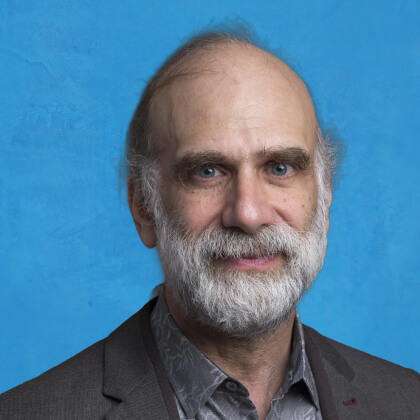
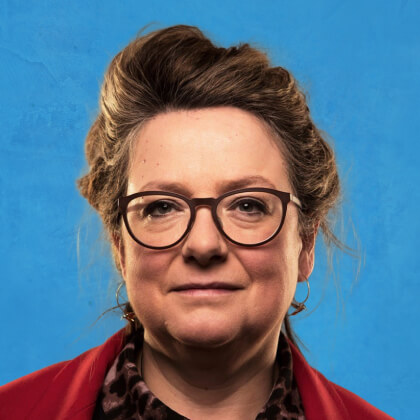
Sophie is a Professor of Cognitive Neuroscience at University College London, a leading researcher on speech, voices and human communication, and author of The Brain: Ten Things You Should Know. In this episode, she explores what happens in our brains when we decide to trust someone and the psychology behind the everyday decisions built on trust.
Background on the Roman settlement, coins and archaeological finds featured in the episode.
Used to trace early forms of money, exchange and the development of coinage.
An example of early coinage from sixth-century BC Lydia.
Background on Roman settlement, trade and the adoption of coinage in East Yorkshire.
Used to explore how trust allows large societies and interactions between strangers to work.
Research on laughter as a social behaviour and signal of connection.
Background on human social networks and the cognitive limit of around 150 relationships.
Science is built on evidence, but who gets trusted to produce it? From Cambridge protests to pulsars, how reputation and authority shaped who science believed.
Con artists don’t steal trust, they build it. From the original confidence man to Ponzi schemes, how scammers turn confidence into their most powerful tool.
Even outlaws need rules. From pirate codes to Mafia rituals, how criminal groups build trust, enforce loyalty and keep order beyond the law.
Lloyd's Coffee House to R.G. Dun & Co. How reputation moved from conversation to ledger to algorithm. The moment trust stopped being personal and became a number.
Medieval merchant guilds to TikTok influence metrics. How the oldest reputation mechanism in history got rebuilt at planetary scale and immediately gamed.